Roadhouses and bus thoughts

all passengers
A sign spotted at the Adelaide bus station

On Friday I caught a bus from Melbourne to Adelaide, which is about 11 hours. This wasn’t the original plan – I had wanted to take the Overland train, which isn’t that much more expensive and is a little bit more comfortable. But for the lack of comfort enough to sleep on a bus, I like the provision of time and vibrations in order to just sit and think about things. There’s something hugely comforting about being in transit, especially when one can sense the distance being covered (i.e. unlike on planes, when whole countries can pass beneath unnoticed) and as I write this on the straight red road between Coober Pedy and Alice Springs I note that I have indeed covered quite a distance already.
I overheard the bus driver say that there are supposed to be meteor showers all month. The swag was a good idea then, with its fine-mesh inner layer. More updates on that soon.
What was not a good idea was the quarantine laws between states prohibiting the cargo of fresh fruit and vegetables, forcing me to rely on the roadhouses for meals at specified bus stops along the way. Being coeliac, the only savoury thing I can buy from these places is potato chips, which really isn’t fair. No nuts or salad or fruit… How are truckies expected to stay healthy?

Adelaide. Mountains of thanks to Walter and Mélody for having me and feeding me my first real food in 14 hours. I had such a lovely time with you both! Our morning walk along the beach missed the rain by a few minutes; the ocean looked like mercury against the clouds; and I made acquaintance with a ghastly ‘silent stranger’ that was commissioned by an artist ‘to keep people company.’

Another 11 hour bus ride to Coober Pedy, the opal mining town, which I’ve been wanting to go to ever since my housemate James told me about the dug-out houses a month ago. Instead of being built upon the ground like regular houses, the homes in Coober Pedy are literally dug out of the landscape, in the side of hills and down into the earth itself, to provide insulation from the heat (apparently it gets hot in summer). So I decided to stay in a dug-out hostel, not just for the novelty of it but also for the fact that I would arrive at 5 in the morning after an 11-hour bus ride, and boy am I grateful to my past self for that decision. The rain cleared up minutes before the bus arrived and I trundled through the dark wet streets with my pack and swag until I reached the hostel and was shown to my room. Again, glorious, prostrate sleep.

Coober Pedy- spot the space ship and 11 mentions of the word ‘opal’. They filmed Priscilla Queen of the Desert here, which I ended the day with. TOP MOVIE.

Witness me: I have uncovered all of the mobile posting capabilities

On Friday I leave for Broome via Alice. For your viewing and reading pleasure, I’ll be updating this blog while on my great Australian tour from my mobile device. So here is a gratuitous picture of me with a book that Jonathan gave me yesterday (to save me having to scan or type out the whole darn thing into a word document, which, I ought to add, is not something I’ve ever done, but I can appreciate how one would be driven to such a measure if an alumni library membership cost $170, which it does), just to make sure that this really is possible.

deadly selfie
What a time to be alive

“Explain how this research will benefit the community in question”

The amount of times I’ve started this article over the last three months is pitiful, but let me explain. I’ve been sifting through my unconscious biases so that what I’m about to say doesn’t offend anyone, and I know I haven’t finished this process yet. Moreover, I don’t want this entry to be a huge self-justifying rant about why I should be allowed to do what I want to do. I want to give people who want to criticise me the freedom to do so. I want to engage in a discussion, and I feel that self-justifying rants are rarely conducive to compassionate dialogue.

The short of it is that I want to study Australian Indigenous music. This inclination is based on some very profound things from anthropology and the media (i.e. the huge social crisis in WA, continued social, economic and political marginalisation of Indigenous Australians) and some perhaps very naive things from my own limited experience (i.e. if everyone participates in music more the world will be a much more peaceful place).

There were a few experiences throughout Honours that really stood out to me to confirm that this is what I want to do, namely a.) some select conversations in and out of the field, and b.)… the application for ethics approval. Yeh, definitely a highlight. But seriously, hear me out.

While in the field I had many discussions with some pretty delightful humans. Somehow, a few of these led to local and international politics, and how Australia and Indonesia differ with regards to their respective indigenous peoples, and there was one recurring question: what about the remote Aboriginal Australians? How do they fare? I remember being ashamed by not only our government’s systematic neglect of Australian Indigenous people but also how little I knew about the whole situation. I wanted to know more.

Back at home in the music department, at lunch, in the office, speaking with friends and lecturers, I gathered the general notion that research in remote Aboriginal Australia was ‘dangerous,’ and ‘challenging,’ and I was ‘brave’ and perhaps a little too ‘innocent’ to wholly take the plunge into this realm and live to tell the tale. These exchanges are somewhat reflective of my experience growing up in a rural town that demonised and pathologised the local Indigenous population. But not only is there resistance from the academy, I’ve felt a certain weariness and mistrust from Indigenous people regarding academic research, and remember that this is a relationship founded on a profound imbalance of power, not to mention the systematic abuse of that power. So, in fairness, I’m slowly beginning to appreciate that some people are not comfortable with these confronting social realities. But for me, it doesn’t feel like an option to sweep it under the proverbial carpet, as there is much work to be done and it’s work that I feel I can do. Besides, there is evidence to suggest that Music NT is providing some innovative and life-changing music promotion and education initiatives in the Northern Territory, but in WA, there simply isn’t as much infrastructure or political interest (i.e. sweet LACUNA).

My final nudge in this direction was sensed while filling out a pretty standard application for ethics approval for my Indonesian research.I came across a question that still resonates with me today: Explain how this research will benefit the community in question. In Indonesia, there are definitely benefits for the community, for example, documentation of musical traditions assists the community in piecing together their own history and traditions. In Australia, however, these benefits are magnified by the element of social distress – there is a sense of urgency to retain aspects of cultural identity for the sake of the mental well-being of the people involved. Many aspects of indigenous life ares at odds with Western culture and economics, to a far greater extent than Indonesia, whose population is made up mostly of people indigenous to the region. In Australia, however, Indigenous people make up less than 3% of the total population, and their history since colonisation is marked by genocide, cultural oppression, political neglect… It is for this reason that research into any form of indigenous music almost necessitates some form of application within the community. I’ve always said I want to do more applied ethnomusicology, and I’d love to put myself in the position where finding solutions to complex social issues is an integral part of the research process. I should probably be in sociology.

To combat my own ignorance, I’ve been researching Indigenous politics and anthropology for the last few months, and I’ve developed an understanding that could only be considered basic for all Australians, especially those who aren’t Indigenous. There are mountains more to learn.

Also, I’m planning a trip to SA/NT/WA very soon. Stay tuned, invisible follower base.

Honours Recovery: a very messy attempt at articulating my current head-space (cw: it’s negative*)

I didn’t want to write about this but it’s the only thing that’s flowing at the moment, and I suppose it might be handy to explain why that is. I’m having difficulty writing anything at all at the moment because, perhaps, the thesis-writing process, for me, was not enjoyable. Now writing has become a chore, something always written for someone else and never for my own pleasure. Any part of writing in my thesis that I enjoyed writing (usually those passages where I was describing landscapes, people, situations, etc.) ended up being cut out in the final draft, and although I went into Honours knowing that this could be the case, it has taken an unexpected toll on my psyche. Even the very words I’m writing now are being wrung from me counter-intuitively.

For me, the joy of writing is in its capacity to express some deep-seated understanding of something that I think would be useful for others to read. My Honours experience was not about that. My thesis was not imparting knowledge that I deeply understood, it was created to fulfill a selfish purpose (i.e. a stellar mark) rather than a society-based purpose (i.e. contributing something that made organic sense and could be useful). As a result, I handed in a thesis that I wasn’t proud of, and as such, felt no sense of achievement.

The evening after I handed in my final assignment I remember waking in a cold sweat at 3am, afraid that that very assignment was still not finished and three days late (I handed it in three days early).

I pushed myself past the point of exhaustion. Now I am unable to form full-length sentences anymore, let alone structure narratives of any complexity (case in point: this. I apologise). I have lost patience and the capacity to be present in any given moment. I’m also still constantly on edge that I’m not doing enough writing and this expectation has completely paralysed me, rendering me incapable of proceeding with any of the writing work that I need to be doing.

All of this unfolded insidiously throughout the year. I went into honours as a relatively aware, articulate person and have come out the other end completely disconnected from myself and others, and with deflated confidence, despite achieving a fairly stellar mark. What is possibly the worst part about my situation is that I’m straight back into writing a book chapter for publication. On the outside this is an incredible opportunity to publish something in case I want to apply to do another postgrad-by-research course, but internally I am wearier than ever and need to do a truckload of kayaking through the countryside in order to recover.

*My intentions for posting this is two fold: 1. mostly to warn those wishing to pursue a research-based thesis: remember to breath, to never prioritise a thesis above connection with others, and especially not above your own health, and 2. to clear the air for my own sake so that I could get back into writing without fear. This is not a cry for help, as I have a history of far worse mental illness from which I have developed coping mechanisms that I will implement over time.

Embracing cognitive dissonance

For a few days now (… weeks), I’ve been trying to escape an intense feeling of discomfort to do with the writing of my thesis. I thought numerous times that I’d put my finger on the problem (‘maybe this isn’t what I want to do’, ‘I’m lonely’, ‘this is weirdly difficult’) and this may just be another one of those times, but I’m definitely getting closer with this suggestion: I’ve been experiencing severe and taxing cognitive dissonance between more than one instance of conflicting realities.

Cognitive dissonance is “the state of having inconsistent thoughts, beliefs, or attitudes, especially as relating to behavioural decisions and attitude change,” according to Google. The first instance of cognitive dissonance I’ve been experiencing has to do with the action of writing itself. So I spend all of my days doing it, I lose track of time, my hips are tired of sitting so much, I really want to see my friends, I keep rewriting and rewriting and rewriting the same ideas with different words to suit my imaginary audience and my brain is becoming a big baby. This is both what I really really want and what I really really don’t want. I am a social being and the nature of my work (which focuses a lot on sociology) drags me away from friends. Perhaps it’s situational irony, perhaps it’s cognitive dissonance, either way the conflict it causes in my brain chews up glucose and keeps me awake at night, making me tired and anxious, further decreasing my capacity to deal with it/write good.

The second instance of cognitive dissonance I’ve been experiencing is in the content itself. I’m currently writing a chapter that focuses on the personal experiences of individual women I met in Kepri. The purpose of doing this is to ‘amplify’ their voices in the literature pertaining to Malay/Kepri, as part of the broader effort to validate the cultural knowledge of women. The dissonance arises in the fact that I won’t be able to quote these women directly because I’m not skilled enough in Indonesian, thus rendering their metaphorical ‘voice’ a mere Chinese whisper distorted through my conspicuously biased ‘Western feminist’ lens. I don’t know enough about them to represent them without feeling a little bit guilty. There’s a dissonance between my ‘women experience subjugation in every culture’ attitude and my uncomfortably inadequate perception of the actual lived experiences of these women. I needed more time with them than I could afford.

So HOW on earth does one DEAL with this? A common reaction is to rationalise the perceived dissonance by inventing a ‘comfortable illusion’ (see comic), which is both my cup of tea and against all of my values. I’m not one for oversimplifying things but I do create whole universes in my spare time. I’ve been waiting for my subconscious to come up with something but it’s been too long now. It’s going to take conscious and consistent effort, like I’ve been doing, only double or triple. I need to accept that finding solutions will be uncomfortable, that this discomfort is inevitable and even necessary, and I’ve got to find enjoyment in the process and difficulty of it all.

Is this it, then? To just continue the way I was going? I suppose so, albeit with a heightened awareness of the situation. Besides, one must imagine Sisyphus happy.

 Albert Camus 1942

cognitive dissonance

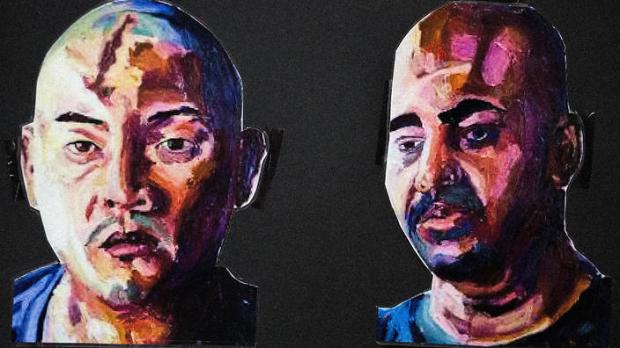
“The eight of them walked out onto the killing field singing songs of praise,” Christie Buckingham, pastor

myuran sukumaran
Photocopies of two paintings by Myuran Sukumaran – on the left, Andrew Chan, on the right, a self-portrait. (AAP/NEWZULU/Richard Ashen)

I’m not going to take a position on this one. I will say that the media coverage was insane over here in Australia, to the point where I ended up feeling like I knew them. I’m strangely proud of the way they conducted themselves in the face of such darkness: singing, of all things, together, in those short moments before nothing, when fear seems like the only logical response to all that has been thrust upon you, to all that you’ve thrust upon yourself. It’s a poignant reminder, for me at least, that the most important thing isn’t happiness, or peace – it’s connection. It’s love. And you must let it pervade everything you do


I have found my Honours topic and it is the most beautiful idea ever

Hey, blog. So I don’t know about you but when I used to think of academia it was usually associated with the words dry, drought, headache, tedious, a harmless drudge, as Bruno Nettl says of ethnomusicology. And this is what I feel when I listen to people whose field of interest is far removed from mine. This is also what I feel when the human element lacks in a piece of writing. I would not have survived as an ethnomusicologist in the positivist era, when they took a much more scientific approach towards collecting and analysing data, and the people themselves that were subjects were treated in a wholly different way from the current postmodern reflexive approach*. I’m not saying a more scientific approach to music research is of no value, but it tends to lacks the aspirations of application to society; it tends to encourage development only within and for itself. I had an argument with one of the lecturers the other week about WHY we make such an effort for the sake of academic rigour when we’re not going to make any sort of difference in the world outside of our field of study. His hodgepodge answer hid behind ‘epistemology’ jargon (“Why do we do anything? You could ask that of any discipline”) so I will take that up with him again when I’m more educated. For now, applied ethnomusicology is where I’m headed. Please remember this, future Bri.
The semester has well and truly begun, in fact it’s fairly nearly almost finished. We’re into week eight next week. I’m drowning in reading as I have been since this time last year, but I’ve done it to myself. I keep finding texts within the texts I’m reading that I want to read and it’s spiraling out of control in a beautiful, slow-motion kind of way. I’m not sure if I told you what started it all; what sparked my curiosity in the first place. Syair (pronounced sha-ear).

*insert audio, ideally*

Syair is a traditional Malay form of poetry with a rhyming scheme of a-a-a-a, probably developed from the Arabic form shi’ir*. In a particular part of Indonesia (called Kepulauan Riau) this poetic form is closely associated with a specific, recognisable melodic form. In Bahasa Malay and Bahasa Indonesia the verb “to read” is synonymous with the action of singing, as in Qur’anic recitation, where “recitation” of the Qur’an involves complex and ornamental vocalisation of the text in one of the many Middle-eastern music modes. While syair is strongly associated with Islamic vocal forms such as this, as well as Islam in general, syair in the nineteenth century was a key story-telling device created by and for women to challenge gender perceptions of that time. The vocal quality, although no recordings have survived, is said to have been tremendously emotionally evocative*.
Contemporary literature and recordings of syair are minimal as well, leading one to believe this particular style is dying out along with associated cultural traditions such as the Malay theatre style known as bangsawan. But there is also evidence that it has been disastrously overlooked in contemporary research because of its perceived simplicity (a-a-a-a? Just tells a story? May as well study pantun [a-b-a-b, develops metaphorically], which is much more theoretically rich in itself).

So there are two things driving me here. The first is obvious: my curiosity, the intrigue, the capacity of nineteenth century syair to empower the Muslim woman and subvert the status quo (i.e. context). The second is the meekest subtlest little moment that occurred a few months ago: I’d just found out about my Indonesia grant, one of the sessions had just rounded up at the Kepri conference in the auditorium, my head was full of this melody Dwi had sung the night before, and she was one of the first people I ran into.
“Dwi! I got the grant. I’m going to Indonesia,” over-excitedly.
“Oh, what are you going to study?” She was taken aback by my over-excitement and just basically stared back at me.
“Syair.”
“OHHH!”
And BAM. She got it, smiled wide to her ears, latched onto my exhilaration and pulled me into a photo (see previous post). So basically, my second driver is the glint in Dwi’s eye when I told her I’d be studying syair. Yes, I’m being driven by a mere instinctual inkling. But it means something to her, no matter about Western scholars who have their own idea of what’s important. I want to get to the bottom of that enthusiasm. This is what reflexive methodology means: giving the camera to the culture-bearer and seeing what they choose to film*. I’m going into the field without any (much) idea of a theoretical argument to make, which feels like the most organic way to do meaningful field research.

So you’re up to speed, then. I’m excited out of my wits. I’ll be in Kepri, Indonesia, between mid-June and the end of July.

*If y’all want further reading/ references, in some cases I can’t give it to you but in most cases I can, so feel free to contact me.

(Photos that I said I was going to post)

Here are just a few… I’m with Dwi Saptarini in the second photo, a marvelous singer and public figure who I hopefully will be working closely with when on my trip to Kepri in July. The third photo is of Leonard Andaya, whose most recent book is about the world of the Southern Malays (but I was mostly fascinated with how photogenic he was (my first day on the camera)). Next to him is the Chancellor of Monash University and next to him is the new Head of Music at Monash, John Griffiths. Thanks Javier and Dwi for the other two photos.

The Second International Symposium on Indonesia’s Malay Arts: my view from below

*pictures to come*
The past three days I attended, helped organise, and presented at this top-notch fancy conference at Monash Uni. I’m still reeling emotionally so I apologise in advance for my sloppy writing… I don’t know where to begin. I guess I’ll start with the particularly difficult task of standing in front of 30-40 scholars who have all been to the part of the world that I was presenting on. They’ve all published books and articles. They all speak bahasa. All I can say is “I don’t speak Indonesian”, as well as the main things like “yes”, “please”, “how are you”, and “I’m good, thank you”. This was unsatisfactory.
Never have I ever felt more out of my depth. During my presentation, my voice wavered like it used to in high school, which I thought I’d since gotten a handle on. I managed to stick to the time limit and when question time came a good lot of them asked me questions that they knew I couldn’t answer. One told me outright that many of my assertions were wrong, which was fair because they (probably) were, and he gave me a lot of help afterwards and we’ll be in contact. I have a lot of respect for his writing already. As for the rest of the questions and comments, I could only respond with “I don’t know” and “thank you, I’ll look into that”. Keeping my cool only made them madder, and one lady lashed out at me the following afternoon – “How can you present when you haven’t done any primary research!?” She’s a little unhinged to begin with… Last night she ridiculed me in Indonesian in front of a group of Indonesianists I will be working with over the coming year. I didn’t mention to anyone I’ve only been interested in Indonesian studies for four or five months; I couldn’t afford to lose the single or partial shred of credibility that I already have. This handful of experiences gave the conference an elitist tinge – but this is only my view from below, as an unqualified, may-as-well-be-an-undergraduate, idealistic student. I was the microphone-runner in everyone else’s question time, which I have no issue with, but I think that this labelled me as inferior in the minds of others. It makes me wonder if these are the sorts of people I want to one day count myself among. It makes me wonder that maybe I don’t want to, even when I am eventually accepted. The last three days do not, however, dictate how I myself will end up. And I secretly love being ruthlessly cut down to size; if only for short bursts of time. They are life lessons on fast forward. I have never been more committed to learning bahasa and I’ve been reading the standard ethnomusicology texts like a Hermione.
ANNNNNNNNNNDDDDDDD I have been selected to receive the ANU Indonesia Project Research Travel Grant. I’m going to Indonesia baby! A year of a lifetime lies ahead of me!

N.B. A handful of them were super nice, I don’t mean to generalise. I met some really cool, supportive people also.

Music and conflict resolution

I finally decided on a topic about two weeks ago, although it’s too big for honours. I hope to pursue it in my PhD (haha, I said with such confidence!). Although, again, it’s enormous. I may never ever get ethics clearance. A Monash ethnomusicology alumni just got pretty badly injured by a suicide bomber in the field where I want to be working, and women (and Australians for that matter) are strongly advised not to travel there.
ANYWAY. Here’s the plan. Pardon me while I make a bloody mess of being politically correct.
I’ve been engrossed in the issues surrounding Islam and the West, and how they fundamentally differ on a basic level, one of values, the extremes of which are exemplified by Islamic extremism and the rise of ISIS on one side and hyper-consumerism and “hyper-financialism”/capitalism on the other. One is oil, the other water, and in the midst of the mixing that is globalisation and the effort of trying to balance these immiscible extremes are some very angry, violent, and psychologically imbalanced people. These people are apparently concerned with obtaining power by any means and it is this obsession that is driving societies to collective psychological sickness. A sickness that puts vulnerable people under their power in an even more vulnerable state, with little to believe in, and little hope. In many of these places music is either haram or, equally worse, just another commodity to be sold to consumers who can afford it. But (and this is where I’ll have to watch how much of a hippie I sound like) music is food for the soul, and necessary for a functioning society not unlike universal free healthcare. Dancing doesn’t just feel good, it connects us; it makes us feel community.  This sense of community is diminishing in our 21st century maze of cultures and technology, diminishing as far as my eye can see, but it is just what we need to survive all the problems we’ve created for ourselves, such as rising CO2 levels, ideological wars, and I COULD sound more idealistic, but collective music making/participating is a possible avenue to begin to achieve a renewed balance.
More on the how later…